Personal project · Edge AI · AWS IoT
Turning real-life problems into data-driven decisions
Electronics, IoT, ML, and cloud—combined to measure footfall and vehicle movement before a family business investment, so the choice was backed by data—not guesswork.
Why this project
My father was planning to open a business, and we wanted to understand real footfall and traffic patterns on the ground before committing capital. I designed and deployed an end-to-end pipeline: edge capture and inference, secure cloud ingestion, and observability—so we could reason from evidence, not assumptions.
Along the way I leaned on the same instincts I use at work: reliable services, least-privilege access, repeatable deployments, and systems that keep running when network and power are imperfect.
From edge to cloud
High-level data path—camera and ML on-device, AWS for orchestration, updates, and monitoring.
Build journey
The path started with ESP32-CAM, Raspberry Pi Zero, and NVIDIA Jetson Nano prototypes—learning limits of power, thermals, and camera placement in the field—before standardizing on Raspberry Pi 4 for better power management and a compact footprint at the roadside.
I flashed SD cards more times than I can count, tuned regions of interest in detection code, chased the “perfect frame,” and even ran the rig from a solar panel where mains power was awkward—half field engineer, half developer.
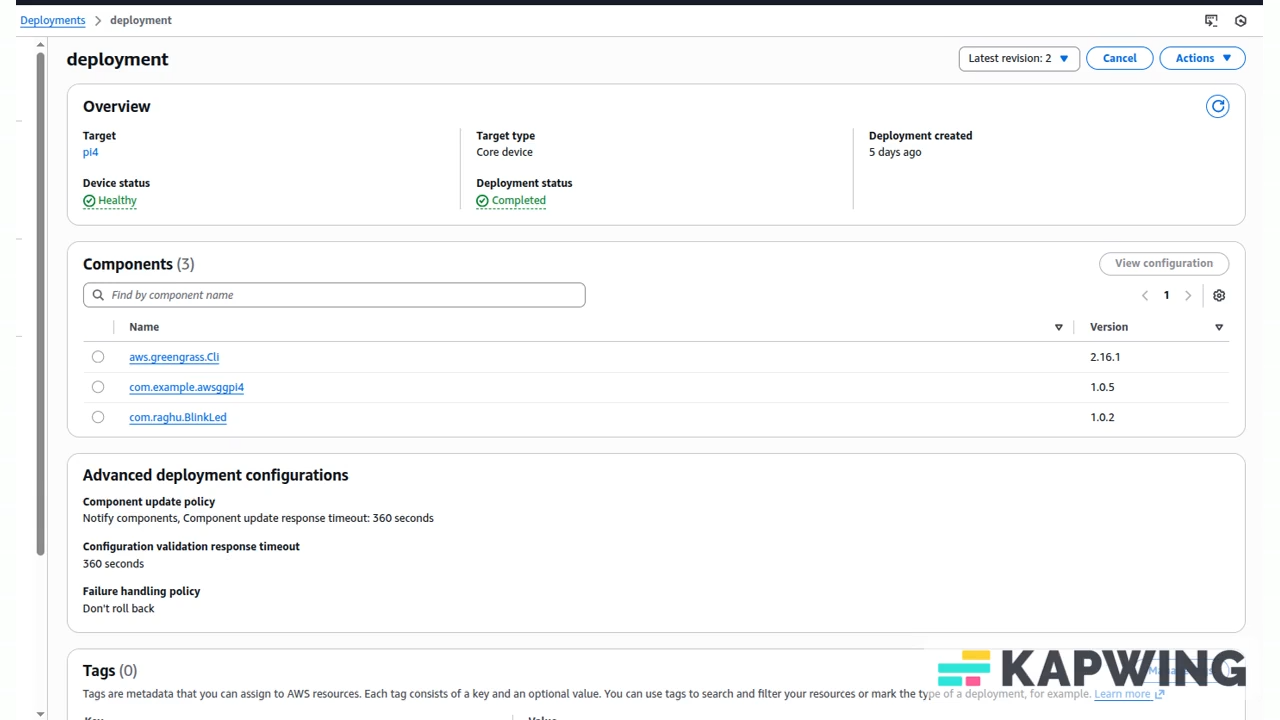
On the software side I packaged AWS IoT Greengrass components on the device and applied DevOps habits: service accounts, permissions, background reliability, and remote observability—so ML inference and data pipelines kept running on constrained hardware.
One of the best payoffs was deploying and updating ML models remotely while miles away, with AWS-side monitoring for battery, device health, and data flow—proof that edge + cloud can be operated like production infrastructure.
Based in a small village with limited parts access—sometimes a ~70 km trip for a single component—that constraint only sharpened the build–test–learn loop.
This is the kind of work I care about: hardware meets software, cloud meets edge, and ideas turn into measurable impact. More analytics and visualizations will land here over time.
Boards, power, and optics
Edge stack
- Raspberry Pi OS on Pi 4
- USB / CSI camera, ROI tuning in software
- AWS IoT Greengrass v2 components
- Local ML inference + telemetry
AWS services
- AWS IoT Core (things, policies, MQTT)
- Greengrass for deployment & lifecycle
- Lambda & supporting ingestion patterns
- Monitoring for device health & battery
Prototype path
- ESP32-CAM — quick imaging
- Pi Zero — size vs. thermal tradeoffs
- Jetson Nano — GPU path exploration
- Pi 4 — balance of power, I/O, stability